
Tray dryer for controlled kernel drying.
Machine selection guide
Tray Type Cashew Kernel Dryer
Review what this machine does, where it fits in the processing line, which capacity and utility details matter, and whether it may reduce manual labor.
- Best-for summary
- Capacity and utility notes
- ROI and WhatsApp quick actions
Buyer decision notes
Should this machine be in your line?
Use this quick summary before sending a requirement or comparing machine models.
50–500 kg/batch typical
Cashew Kernel Drying
Shell and Kernel Separation → Cashew Kernel Humidifying
Power, steam, air compressor, layout, and operator requirements should be confirmed.
Use the labor ROI tool to compare manual output with machine output for this stage.
Want to know if this machine can reduce manual labor?
Open the labor saving calculator and compare manual output with machine output for this processing stage.
Fungua kikokotoo kuona kama mashine inaweza kupunguza gharama ya kazi.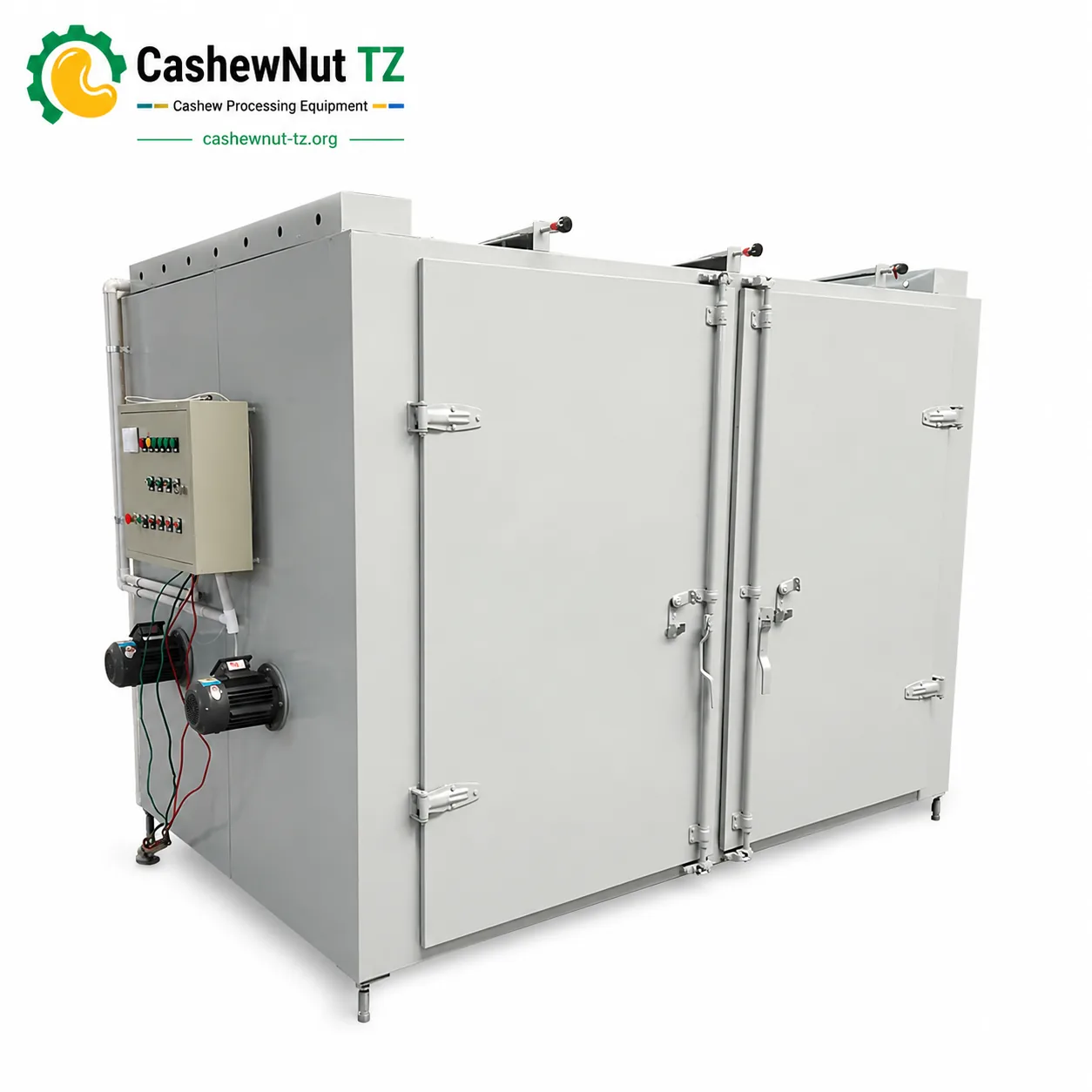
Boss Summary Box
- Best for
- Tray dryer for controlled kernel drying.
- Main decision
- Confirm capacity, automation level, utilities, and line configuration before model selection.
- Before process
- Shell and Kernel Separation
- After process
- Cashew Kernel Humidifying
- What to confirm
- Raw nut condition, target capacity, power, utilities, factory space, and spare parts needs.
What This Machine Does in the Line
Before this machine
Shell and Kernel Separation
This machine
Tray Type Cashew Kernel Dryer - Tray dryer for controlled kernel drying.
After this machine
Cashew Kernel Humidifying
Technical Parameter Table
| Processing stage | Cashew Kernel Drying |
|---|---|
| Machine type | Cashew Kernel Drying Equipment |
| Automation level | semi-automatic |
| Recommended factory scale | Small, medium, or custom line configuration |
| Typical capacity | 50–500 kg/batch typical |
| Power source | 3–24 kW depending size |
| Voltage options | 380V customized |
| Machine size | Confirmed after model, capacity, and layout selection |
| Machine weight | Confirmed after model and layout selection |
| Utilities to prepare | Power or heat source, ventilation, moisture-control space, trays or chambers, and safe operator access. |
| Selection note | Confirm batch size, moisture target, heat source, working hours, and how kernels move to the peeling stage. |
| Configuration note | We confirm model, capacity, size, power, packing scope, spare parts, and price after reviewing your factory requirement. |
Use these values as a planning reference. Machine dimensions, power, utilities, spare parts, packing, and price are confirmed after your capacity and site details are reviewed.
Before You Buy Checklist
- Raw cashew input per day
- Nut size range
- Workers and automation preference
- Power supply and operating hours
- Steam or boiler condition
- Air compressor requirement
- Available factory space
- Spare parts and operator training needs
After machine selection
Installation, training, and spare parts should be planned early
We do not ask buyers to choose machines blindly. Site condition, utilities, operators, and maintenance needs should be discussed before order.
Installation discussion
For qualified line projects, onsite installation support can be discussed before order according to machine scope and site condition.
Operator training planning
Training requirements should be discussed with the selected machines, automation level, utilities, and operator experience.
Spare parts preparation
A spare parts list can be prepared for blades, belts, bearings, molds, and other wear parts according to the machine list.
Recommended Guides
Capacity Planning for Cashew Kernel Drying Equipment
A practical buyer-first guide for cashew processors on capacity planning for cashew kernel drying equipment. Covers capacity matching,...
Tray Dryer vs Drying Room for Cashew Kernel Processing
A practical buyer-first guide for cashew processors on tray dryer vs drying room for cashew kernel processing. Covers...
How Drying Temperature and Time Affect Cashew Peeling Results
Drying temperature and time directly control how easily cashew kernels peel. This guide explains optimal drying ranges, time–moisture...